 Alexandra Oakley
 Every September I clear a shelf in the shed, dig out the seed trays, and start sowing again. It always feels slightly odd to be thinking about next spring when the dahlias are still going strong, but that is exactly the point. The seeds I sow in autumn are the ones that give me the earliest, strongest, most generous flowers the following year.
I do not have a greenhouse. I have a shed with a big window, a cold frame, and one of those cheap zip-up plastic greenhouses. That is more than enough. Hardy annuals are called hardy for a reason, and most of the seeds I sow in autumn are perfectly happy growing on slowly through winter in unheated conditions.
Why I bother sowing in autumn at all
One day of sowing in September, and by May the garden is full of flowers that spring-sown plants would not have produced until July.
The main reason is timing. Seeds sown in autumn have months to develop a strong root system before they need to perform. By the time spring arrives, they are already established young plants ready to grow fast and flower early. The same seeds sown in February or March will flower, but later and often smaller.
The other reason is simply that it spreads the workload. Spring is already chaotic enough with potting up dahlias, planting out sweet peas, and trying to keep on top of everything else. If the hardy annuals are already growing quietly in the cold frame, that is one less thing to panic about in March.
My setup without a proper greenhouse
I think a lot of people assume you need a greenhouse to sow seeds in autumn. You really do not. My setup is deliberately simple:
What I use
For germination: windowsills in the house, where the temperature is consistent enough to get seeds started.
For growing on: the potting shed (big window, unheated), a cold frame, and a zip-up plastic greenhouse — the kind you can buy for about thirty or forty pounds.
For frost protection: a layer of horticultural fleece thrown over the seedlings on the coldest nights.
The key thing is light. Seedlings that do not get enough light over winter become leggy and weak, and that is much harder to fix than a bit of cold.
The hardy annuals I would genuinely make time for
I have tried a lot of things over the years. Some have become absolute staples, and some I have quietly dropped. These are the ones I keep coming back to.
Cornflowers
A staple I would not want to be without. Since discovering Pink Ball and Black Ball I love them even more than the standard blue. They are useful for filling gaps, they self-seed gently, and they look right in almost any cottage garden setting. I sow in trays rather than relying entirely on self-seeders, because it means I can be sure I have enough and put them exactly where I want them.
Ammi majus
Beautiful, wispy and floaty. It works with absolutely everything, especially roses. I have grown it since my first autumn sowing and it has never disappointed. The only mistake I made early on was planting it at the front of a border, where it grew enormous and looked completely wrong. It wants to be at the back, doing its delicate thing behind other plants.
Larkspur
The closest thing to a delphinium you can grow from seed in a single season. Autumn-sown larkspur flowers earlier and stronger than spring-sown, and the spires of blue and purple are one of the things I look forward to most in early summer.
Sweet rocket
Technically a short-lived perennial, but I sow it every year to make sure I always have plenty. Sown in September, planted out in late February, flowering by mid-May. The scent on a warm evening is reason enough.
Nigella
Easy, reliable, and the seed pods are almost as good as the flowers. It self-seeds freely, but I still sow a tray to make sure the colours and quantities are where I want them.
Calendula
If you have never sown a seed before, start here. Completely uncomplicated. Sow in September or October, and you will have flowers from early May. It is forgiving of almost every mistake a beginner can make.
Orlaya
White lace-flat heads that look beautiful with almost anything. Not always the easiest to germinate, but worth the effort when it works.
What I sow in autumn versus what I leave until later
Not everything needs to go in the ground in September. I think of it in two waves:
Autumn versus later sowing
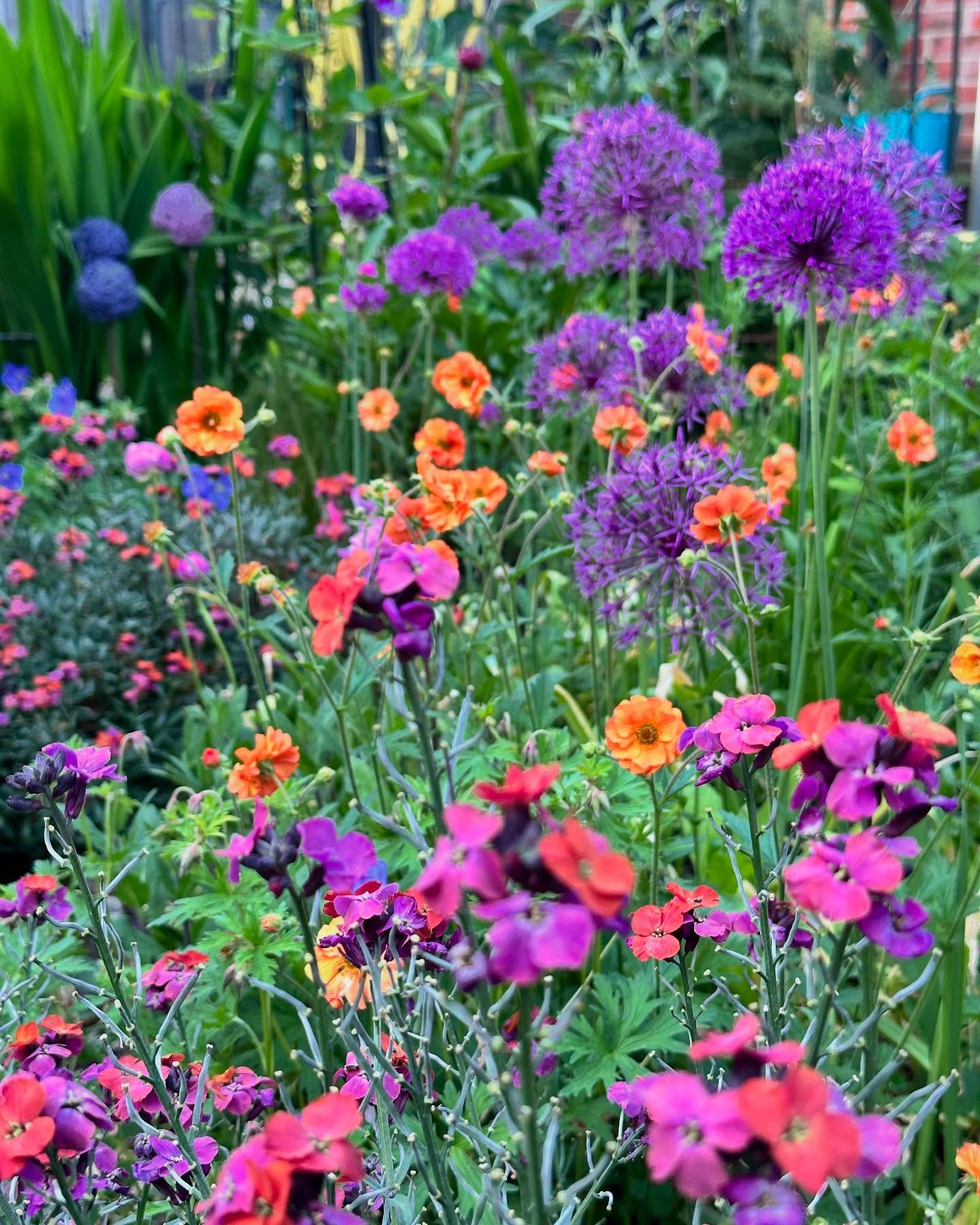
September–October: cornflowers, ammi majus, larkspur, nigella, orlaya, sweet rocket, calendula, snapdragons, scabious.
October–November: sweet peas, cerinthe, ranunculus.
January–February (top-up): larkspur, ammi, cerinthe, snapdragons, strawflowers — anything I missed or want more of.
The January sowing is not a separate season so much as a second chance. If autumn got away from me, or if I want to extend the flowering season by having a later batch, I will sow a few more trays in January. It still works. You just get later flowers.
How I get seedlings through winter
This is the part that worries people most, but it is honestly the easiest stage. Hardy annual seedlings do not need warmth. They need light, a bit of air circulation, and protection from the hardest frost.
Once the seeds have germinated on the windowsill, I move them outside to the shed, cold frame or zip-up greenhouse as soon as they have their first true leaves. They sit there all winter, growing slowly. On very cold nights I throw fleece over them. That is about it.
The things that actually cause problems are not usually cold. They are overwatering, poor light causing leggy seedlings, and leaving them too long before potting on. If the roots start circling the bottom of a small pot, the plant stalls. I try to pot on in December or January, which gives them more room to keep developing through the rest of winter.
Potting on and planting out
Potting on is simply moving a seedling from a small cell into a slightly bigger pot. A seedling that has been potted on into a nine-centimetre pot will be a much stronger plant by planting-out time than one still cramped in its original cell.
I plant most things out from late February into March, depending on the weather and where I live on the south coast. As long as the ground is not frozen and the plants have been hardened off — left outside for a week or two to acclimatise — they cope perfectly well.
Applying nematodes before planting out is one of those small things that makes a surprising difference. Slug damage on young plants can undo weeks of careful growing.
Common problems
A few things I have learnt to watch out for:
- Leggy seedlings. Almost always caused by not enough light. Move them to the brightest spot you have, and do not keep them indoors longer than necessary after germination.
- Crowding. It is tempting to sow thickly, but seedlings that are too close together compete for light and grow weak. Sow thinly or prick out early.
- Losses. Some seedlings will not make it. That is normal. I always sow a few more than I think I need, because replacements are much easier to have ready than to start from scratch in spring.
- Running out of space. This is my most reliable annual problem. Every year I sow too much and then spend January wondering where to put it all.
If you missed autumn, what you can still sow later
If it is already November or December and you did not get around to sowing, do not worry. Most of these seeds can still be sown in January or February and will flower perfectly well, just a few weeks later. Cornflowers and snapdragons in particular are very forgiving of late sowing.
I sometimes do both an autumn and a spring batch of the same thing deliberately, to extend the flowering season. The autumn-sown plants flower first, the spring-sown ones take over later.
The varieties that give the best return
If I had to narrow it down to the five hardy annuals I would genuinely not want a season without, they would be:
- Cornflower Black Ball — dark, dramatic, and endlessly useful.
- Ammi majus — the floaty white that ties everything together.
- Larkspur — vertical blue spires that nothing else quite replaces.
- Cosmos (spring-sown, but essential) — the all-round performer that keeps going until frost.
- Sweet rocket — scent, colour, and the earliest flowers from an autumn sow.
The garden I have in June is built in September. That one afternoon of sowing pays for itself many times over.