 Alexandra Oakley
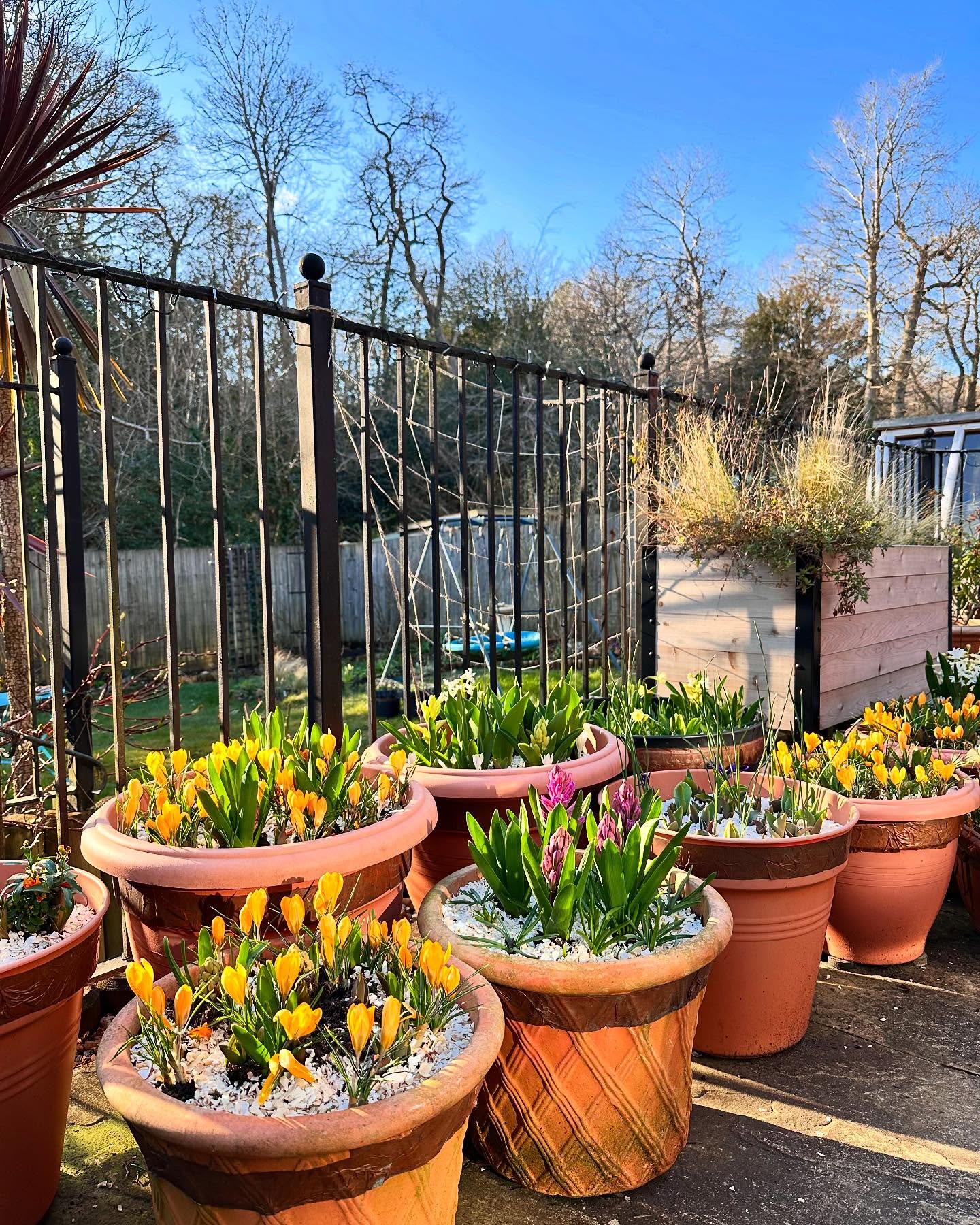
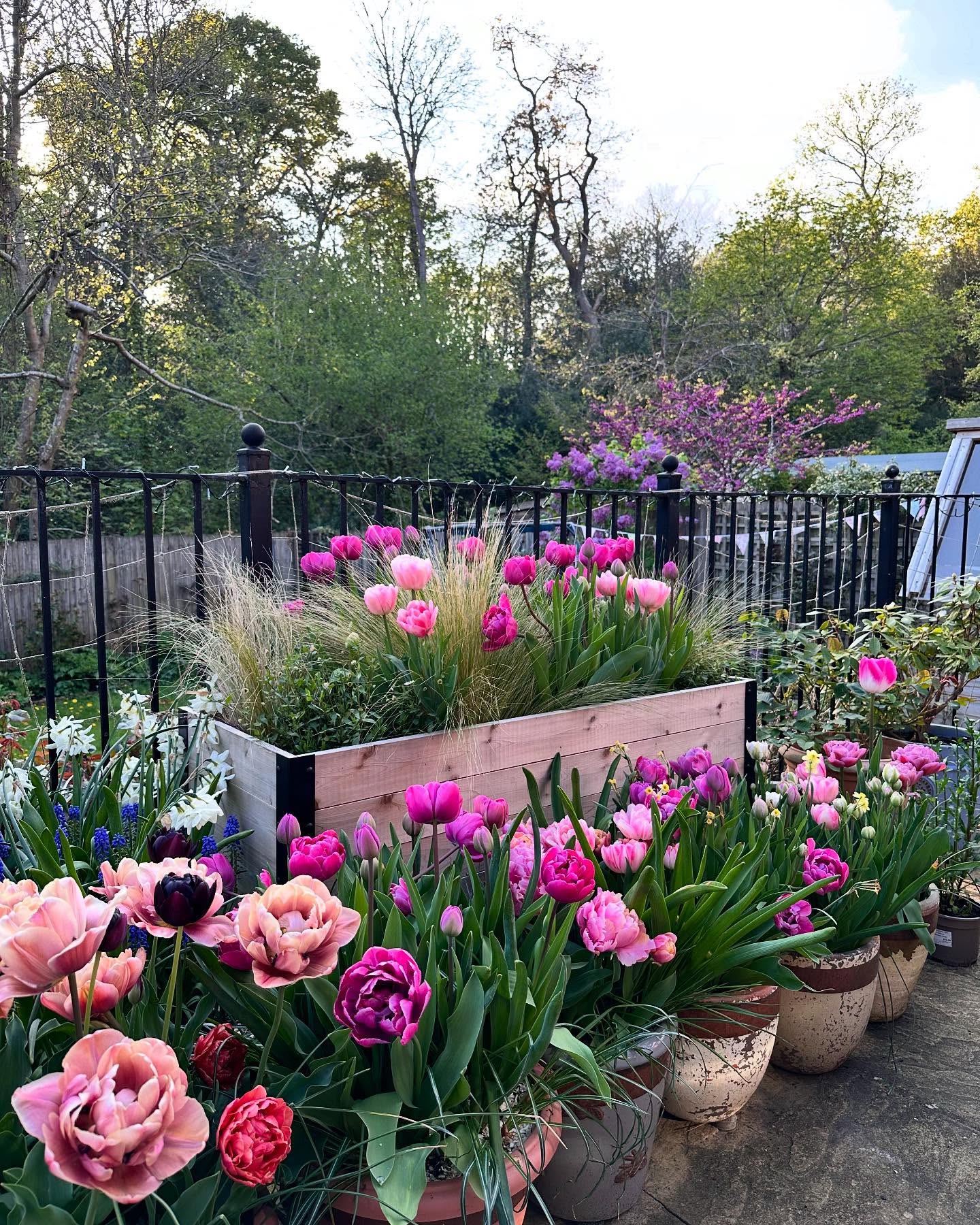
 Every autumn I spend a day planting up bulb pots, and every spring I wonder why anyone would ever bother doing it differently. One afternoon of effort in November gives me flowers from February right through to May. That is roughly three and a half months of colour from a single session of getting compost under my fingernails.
I do not have a huge garden, and I certainly do not have sprawling beds to fill with drifts of tulips. But what I do have is pots, and pots are brilliant for spring bulbs. You can move them around, put them where you will actually see them, and then free them up again for summer once the show is over.
Why I rely on bulb pots so much
I think the main reason bulb pots have become such a big part of my spring is simply because they work so well for a smaller garden. Instead of trying to squeeze hundreds of bulbs into borders that are already full of perennials waking up, I can concentrate the colour exactly where I want it.
Pots also let me see the flowers properly. There is something very different about a pot of tulips by the back door compared to a scattering of bulbs at the far end of the garden. I notice them every single day, and that matters more to me than I probably expected when I first tried it.
The other practical reason is succession. When you layer different bulbs in the same pot, the display keeps changing. Crocuses first, then hyacinths, then tulips. It is not one big moment followed by nothing. It is a slow unfolding that carries you through the whole of spring.
What a bulb lasagne is and why it works
A bulb lasagne is simply a pot planted with layers of different bulbs at different depths, like a lasagne. The bulbs that flower latest go deepest, the ones that flower earliest go nearest the top. As each layer finishes, the next one comes through.
I usually do two or three layers per pot, sometimes four in the very biggest ones. The basic idea is always the same:
How to layer a bulb lasagne
Bottom layer: tulips — they flower last and need to be planted deepest.
Middle layer: hyacinths or narcissi.
Top layer: crocuses, muscari, or iris reticulata.
It genuinely feels like magic, even after doing it for several years.
Choosing containers, compost and bulbs
Pots
I use whatever decent-sized pots I have. They do not need to be fancy, but they do need to be big enough to hold several layers of bulbs with enough compost between them. A shallow pot will not work well because the bulbs end up too close together and the roots have nowhere to go.
Compost
I use a general-purpose peat-free mix with a handful of grit or perlite thrown in. Drainage matters because the pots will sit outside all winter. If the compost stays waterlogged, the bulbs are more likely to rot, and that is a miserable thing to discover in spring when nothing appears.
Bulbs
I order most of mine in late summer or early autumn and plant them in October or November. I try to have a rough plan before I start buying, because it is extremely easy to end up with far too many bulbs and not enough pots, which has happened to me more than once.
How I layer tulips, hyacinths and narcissus
The actual planting is genuinely straightforward once you get your head around the layers. I start with a good layer of compost at the bottom, then place the tulip bulbs pointy end up, spaced so they are not quite touching. Then another layer of compost over the top of those, followed by the hyacinths or narcissi in the middle layer. More compost, and then the top layer of crocuses or muscari. Finally, a last layer of compost to cover everything.
One thing I have started paying more attention to is the height of the tulips. In the bigger pots I now try to put the taller varieties towards the middle and the shorter ones around the outside, so the display has a bit more shape to it rather than everything being the same height.
Instant toppers
If you want the pots to look good from the moment you plant them, add violas, cyclamen or mini hellebores on top. I also love crushed seashells as a mulch — they instantly make the pots look finished and intentional rather than like a pot of brown compost sitting around waiting.
Colour combinations I come back to
This is where I get properly enthusiastic, and where having a plan actually saves you from ending up with a random jumble.
Some combinations I have really loved:
- Belle Epoque and Copper Image tulips together, with a warm-toned hyacinth. The colours are dusky and autumnal but somehow perfect for spring.
- Apricot Beauty with White Dream. Simple and very elegant.
- What I called the peaches and cream pot: apricot tulips, a sort of coral hyacinth, and cream narcissus. That was one of my earliest attempts and I still think about it.
- Miami Sunset with Brownie tulips for something richer and more dramatic.
I always make a list of my combinations before planting day. It sounds a bit organised, but it genuinely helps. When you have bags and bags of bulbs spread across the table and a stack of pots to fill, knowing which bulbs go in which pot saves a lot of standing around looking confused.
Protecting bulb pots from squirrels and weather
If you have squirrels and you do not protect your pots, you might as well not bother planting.
I learnt this early on. Squirrels will dig up freshly planted bulbs with astonishing speed and absolutely no remorse.
My solution is very unglamorous: chicken wire over the top of every pot, pressed down firmly. It does not look beautiful, but it works. The bulbs push through the wire perfectly happily in spring, and by the time anything is flowering, you barely notice it.
For weather, I tuck the pots under the garden table over winter. This gives them some protection from the worst of the rain without keeping them completely dry. You want the compost damp enough that the bulbs can establish roots, but you do not want them sitting in a puddle for months. Rot is the main enemy, not cold.
What I do once the flowers start fading
When the hyacinths finish, I cut off the brown flower stalks to keep the pots looking tidy. But I leave the foliage, because it stays green for ages and actually looks fine while the tulips are flowering around it. The leaves are also doing useful work, feeding energy back into the bulb for next year.
I try not to rush this stage, even though there is always a part of me that wants to clear everything out and move on to summer. The longer you can leave the foliage to die back naturally, the better the bulbs will be if you plan to keep them.
Emptying pots and saving bulbs for later
In a perfect world, I would leave the bulbs in the pots until all the foliage has turned completely yellow. But in my world, I need those pots back for summer annuals and dahlias, and the timing rarely lines up neatly.
So what I actually do is empty the pots when I need them, tip out the contents carefully, and sort through the bulbs. The daffodils, hyacinths, muscari and crocuses I save, because they are reliably perennial and will come back well. The tulips I mostly replace, because in my experience they do not all reflower as strongly in the second year. Some years I experiment with keeping a few tulip bulbs to see what happens, but I go in with low expectations.
Which bulbs to save
Keep: daffodils, hyacinths, muscari and crocuses — they are reliably perennial.
Replace: tulips, mostly — they do not all reflower as strongly in year two.
Store: in paper bags in a dry garage until November.
I cannot plant the saved bulbs straight into a border the way many people do, because I simply do not have the space. Instead, I leave them in buckets until the foliage has completely dried and gone brown, then cut it off and store the bulbs in paper bags in the garage until November, when the whole cycle starts again.
I try to reuse as much of the compost as possible too. It gets topped up with fresh compost when I replant the pots for summer.
I should also admit that I am terrible at labelling. Most years, everything gets mixed up in storage and I end up planting slightly mysterious combinations the following autumn. It has never been a disaster, but it does occasionally produce some unexpected results.
Mistakes I would help you avoid
A few things I have learnt from getting it wrong:
- Do not skimp on pot size. Small pots dry out quickly and do not give the bulbs enough room. Use the biggest pots you can.
- Do not forget to allow for drainage. If there are no drainage holes, or if the compost stays sodden, the bulbs will rot over winter and you will have nothing to show for it.
- Do not forget about squirrels. One unprotected pot is all the invitation they need.
- Do not buy bulbs without a plan. It is very easy to over-order and then run out of pots, space, or patience on planting day.
- Remember to keep a few pots back for sweet peas if you grow them. I forgot to do this two years running and ended up buying more pots, which is how my pot collection got slightly out of hand.
Why I keep doing this every year
Honestly, it is the return on effort that keeps me coming back. One day of planting in November, and then months of flowers the following spring. Very few things in the garden give you that kind of payoff.
Planting bulbs is an act of faith in the next season, and when the first crocuses push through in February, it always feels worth it.
If you have never tried a bulb lasagne, I would say just do one pot. Pick a combination you like, layer it up, protect it from squirrels, and see what happens. I think you will be surprised by how much joy one pot of spring bulbs can give you.