 Alexandra Oakley
 I have built, reshaped and replanted borders in my garden more times than I can count. Some have worked beautifully. Some have had months where nothing happened at all. The difference, I have learnt, almost always comes down to planning — not elaborate design skills, but the kind of thinking you do before you buy a single plant.
A border that looks good for one glorious week in June and then fades into nothing is not a border that works. What I want is colour, texture and something worth looking at from spring right through to autumn.
Start with how you want the border to feel
Gardening teaches you nothing if not patience. When creating a new border there is always a vision behind it, but you might have to wait two or three years for that vision to become reality.
Before I think about individual plants, I think about mood. Do I want hot, punchy colour — reds, oranges, deep purples? Or something softer and more romantic — pinks, whites, lavender? The answer shapes everything that follows.
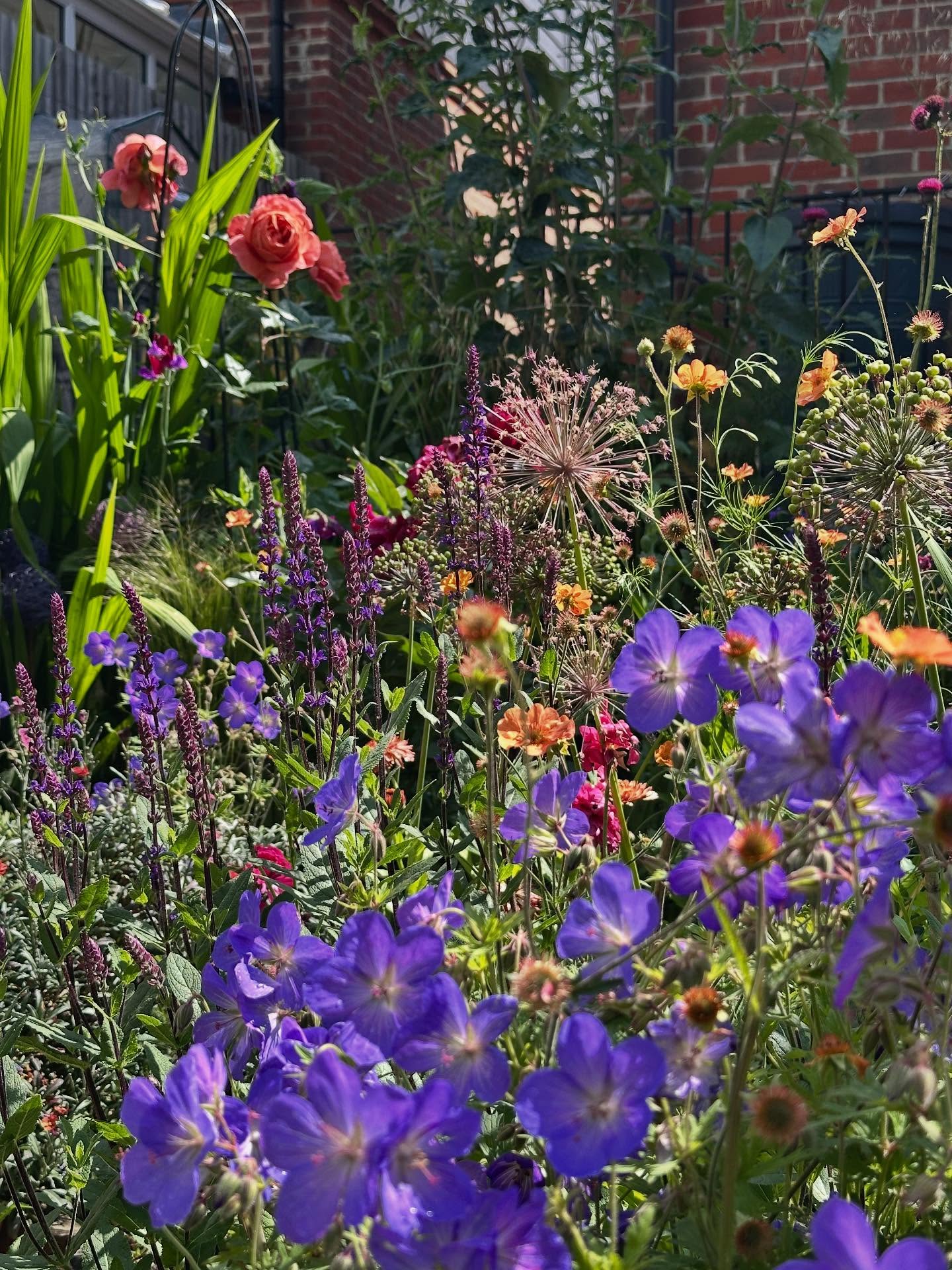
My hot colour border was inspired by combinations I saw at Chelsea — warm reds, orange, crimson, burgundy. My jewel-colour border leans into purples, deep blues and tangerine. Both work, but they work because the palette was decided first, not assembled randomly from whatever caught my eye at the garden centre.
Look properly at aspect, soil and space
A plant that thrives in full sun will sulk in shade. A drought-tolerant perennial planted in wet clay will rot over winter. I have lost gaura, penstemon and salvia nachtvlinder to a combination of frost and endless rain — all plants that should have been fine, but the conditions were wrong.
Before planting, I look at how much sun the border actually gets, what the soil is like, and how much space I am working with. In a small garden, every plant has to earn its place.
Create the shape and edging first
Getting clean edges makes an enormous difference to how a border looks, even before anything is planted. I recently added corten steel edging and it transformed the garden — the borders looked more intentional immediately.
If you are creating a border from scratch, get the shape right first. Measure, edge, dig out the turf if needed, and add good soil.
Build a plant list that covers the whole season
This is where most borders fail. It is easy to fill a border with plants that all flower at the same time, and then wonder why July is glorious and August is bare.
I use a simple spreadsheet. For each plant I note roughly when it flowers, and then I check that every month from May to October has something happening. If there is a gap, I fill it before I buy anything.
A rough seasonal framework
May–June: alliums, geums, wallflowers, peonies, geraniums, early roses.
July: salvia, achillea, verbena bonariensis, lilies, grasses starting to move.
August–September: dahlias, crocosmia, Japanese anemones, hydrangeas.
Annuals throughout: cosmos, cornflowers, snapdragons, ammi — to fill gaps and extend colour.
Choose a palette and stick to it just enough
A colour scheme does not have to be rigid, but it helps enormously. When it comes to red, for example, it has to be the right red — an oriental poppy in tropical red clashed horribly in my hot border, while a self-seeded dark plum poppy was magnificent.
I narrow my plant list by colour first, then by flowering time, then by growing conditions. That usually reduces an overwhelming shortlist to something manageable.
Mix structure plants, fillers and long-season workhorses
A border needs different types of plants doing different jobs:
- Structure plants — roses, grasses like stipa gigantea, shrubs. These give the border its shape even when they are not flowering.
- Workhorses — geraniums, geums, nepeta, penstemon. Plants that flower for months and do not need constant attention.
- Seasonal stars — peonies, alliums, dahlias. Spectacular but short-lived. They carry the border for a few weeks each.
- Fillers — annuals like cosmos, cornflowers, snapdragons. Fast, cheap, and perfect for plugging gaps while perennials establish.
Accept the need to move things around
No border is right on the first attempt. Plants end up in the wrong place, grow bigger than expected, or simply do not perform. I have moved things around more times than I can remember, and doing it sooner rather than later is always better.
The gladioli in my hot border looked wrong from the start — they did not blend in and made everything in front of them flop over. Sometimes you just have to admit a plant is not working and take it out.
What I learnt from borders that worked and borders that did not
- Year one will not look finished. Perennials need time. Fill the gaps with annuals and dahlias.
- August is the hardest month to keep interesting. Dahlias, crocosmia and Japanese anemones are essential.
- Too many plants that flower at the same time creates a peak followed by nothing.
- Mulching matters more than I thought — it protects roots in winter and keeps moisture in summer.
- Grasses add movement and structure that flowers alone cannot.
- I need perennials that just get on with it. If a plant cannot survive winter without special protection, it is probably not worth the effort in my garden.
If I were starting again from nothing
If I had a bare border and needed to fill it from scratch, here is what I would do:
Starting from nothing
Spring bulbs first: tulips, daffodils, alliums. Instant colour while everything else establishes.
One flowering shrub: a camellia, rhododendron, lilac or small cherry tree for structure.
Two or three repeat-flowering roses.
At least one peony — buy at flowering maturity, not bare root.
Fast-growing perennials: geum Totally Tangerine, nepeta, salvia caradonna, geranium Rozanne, achillea, verbena bonariensis, Japanese anemones, hydrangeas.
Grasses: stipa tenuissima and stipa gigantea for movement.
Dahlias for late summer.
Annuals: cosmos, cornflowers, ammi, snapdragons — to bulk it all out while the perennials grow.
The best border I have ever made took three years. Year one was annuals and hope. By year three, it felt like the garden I had always wanted.